Welcome to our letter W coloring pages collection! These fun and educational coloring sheets help children learn the twenty-third letter of the alphabet through engaging illustrations. Each page features objects that start with the letter W, making alphabet learning exciting and memorable.
Perfect for preschoolers, kindergarteners, and early learners, these coloring pages combine creativity with letter recognition, phonics, and vocabulary building. Download and print these free pages for home or classroom use!
Printable Letter W Coloring Pages
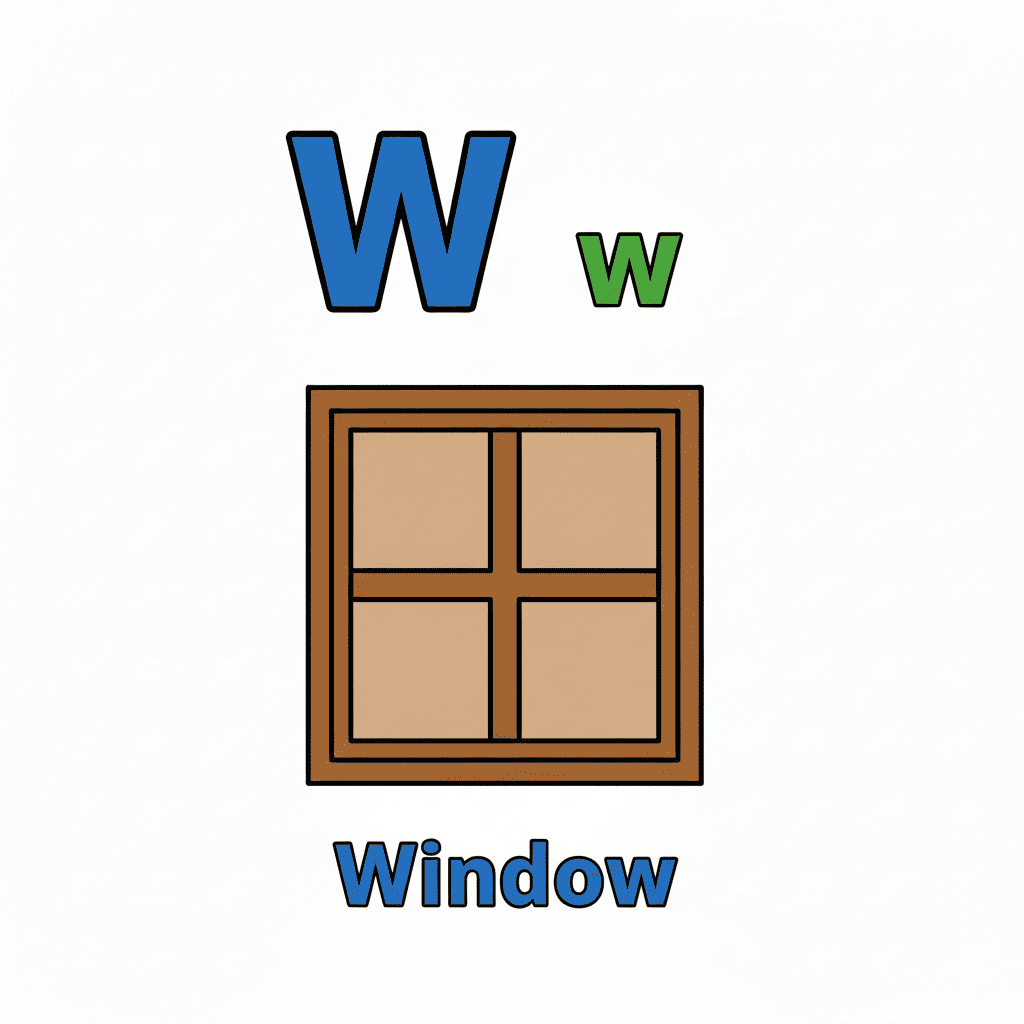
Educational Value of Letter W Coloring Pages
Our letter W coloring pages for kids offer wonderful learning opportunities beyond just coloring. These alphabet sheets help children develop essential early literacy skills in a fun, engaging way.
- Letter Recognition: Helps children identify the uppercase and lowercase letter W with its distinctive double-V shape.
- Phonics & Sound Association: Teaches the distinct /w/ sound, which is a voiced labiovelar approximant.
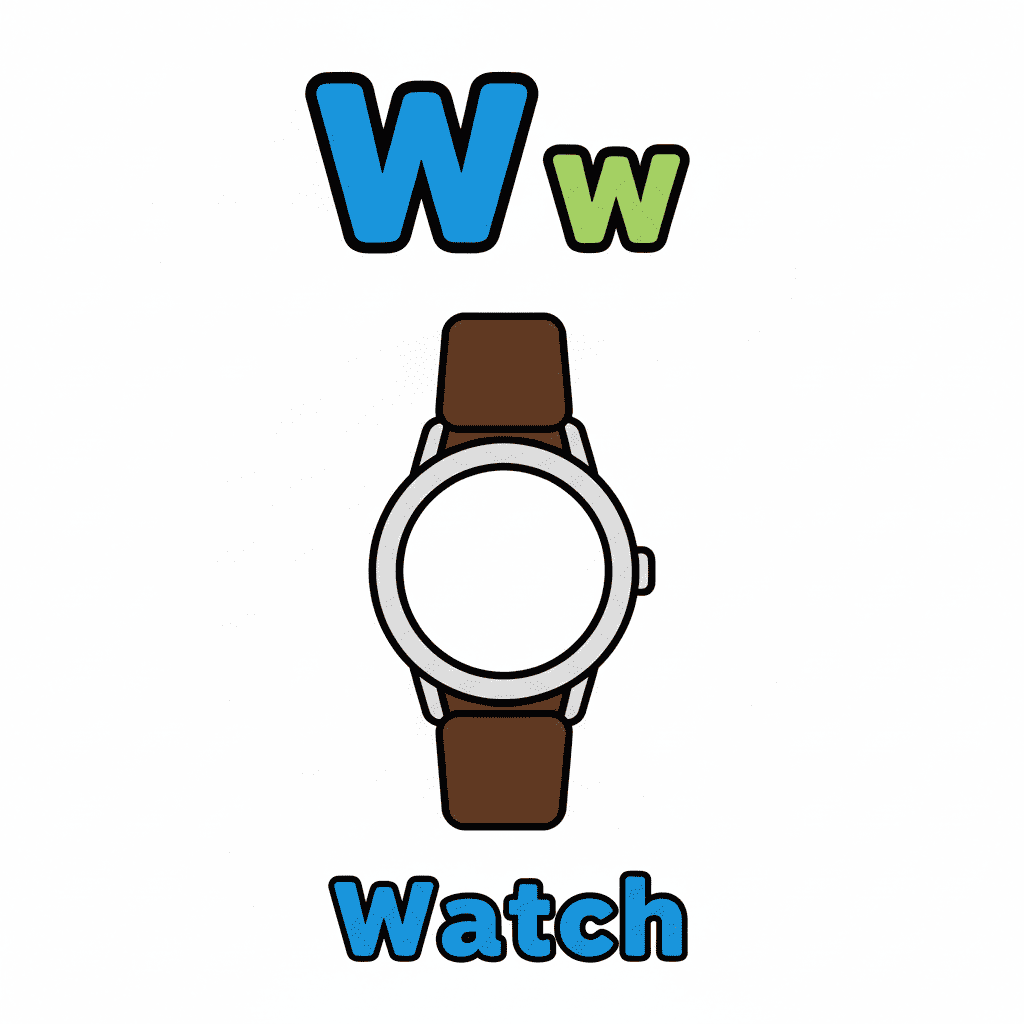
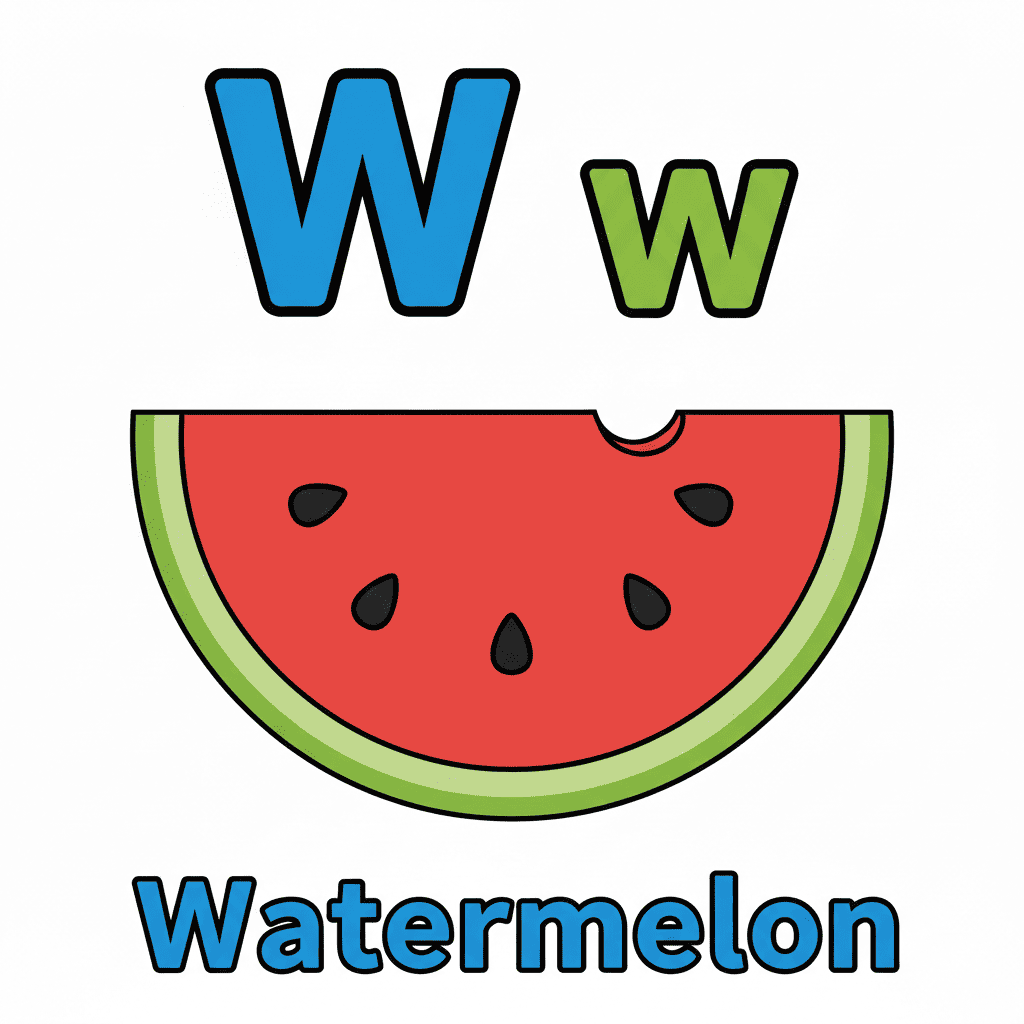
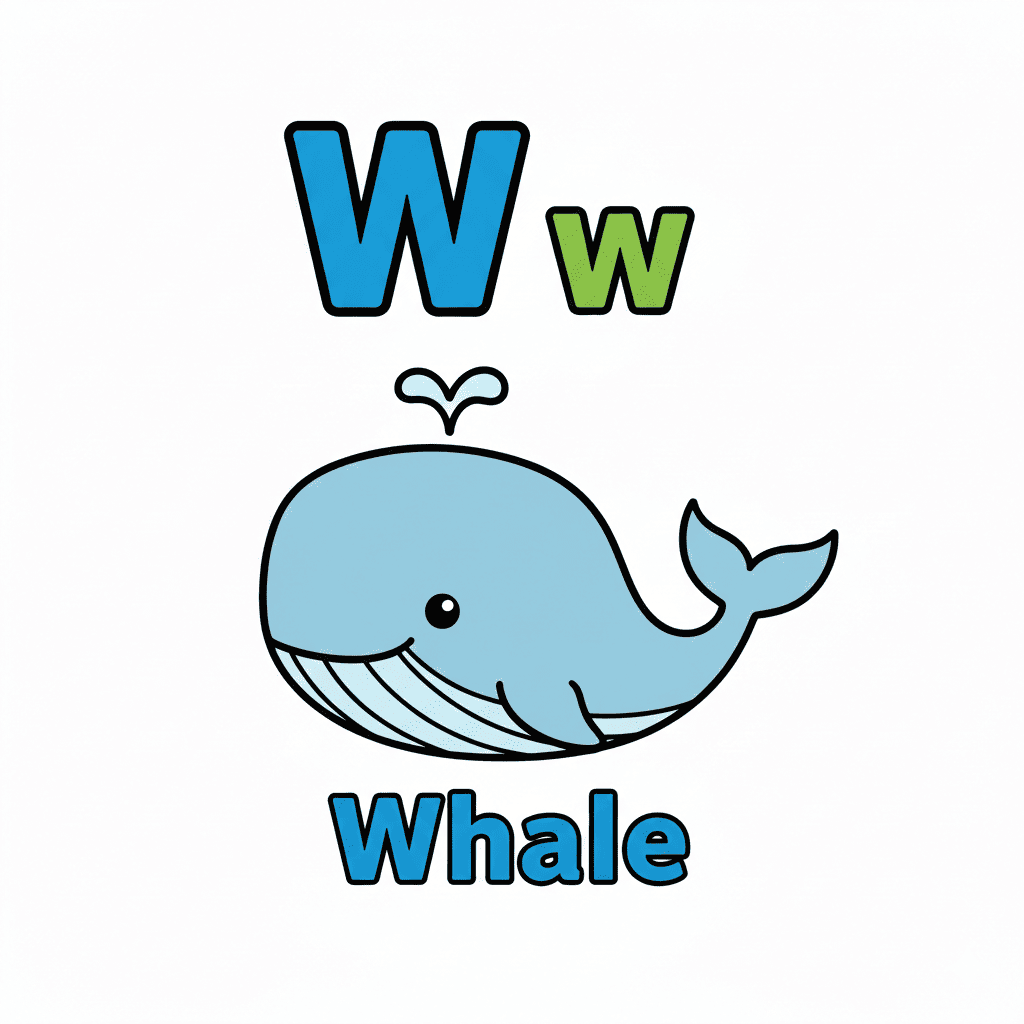
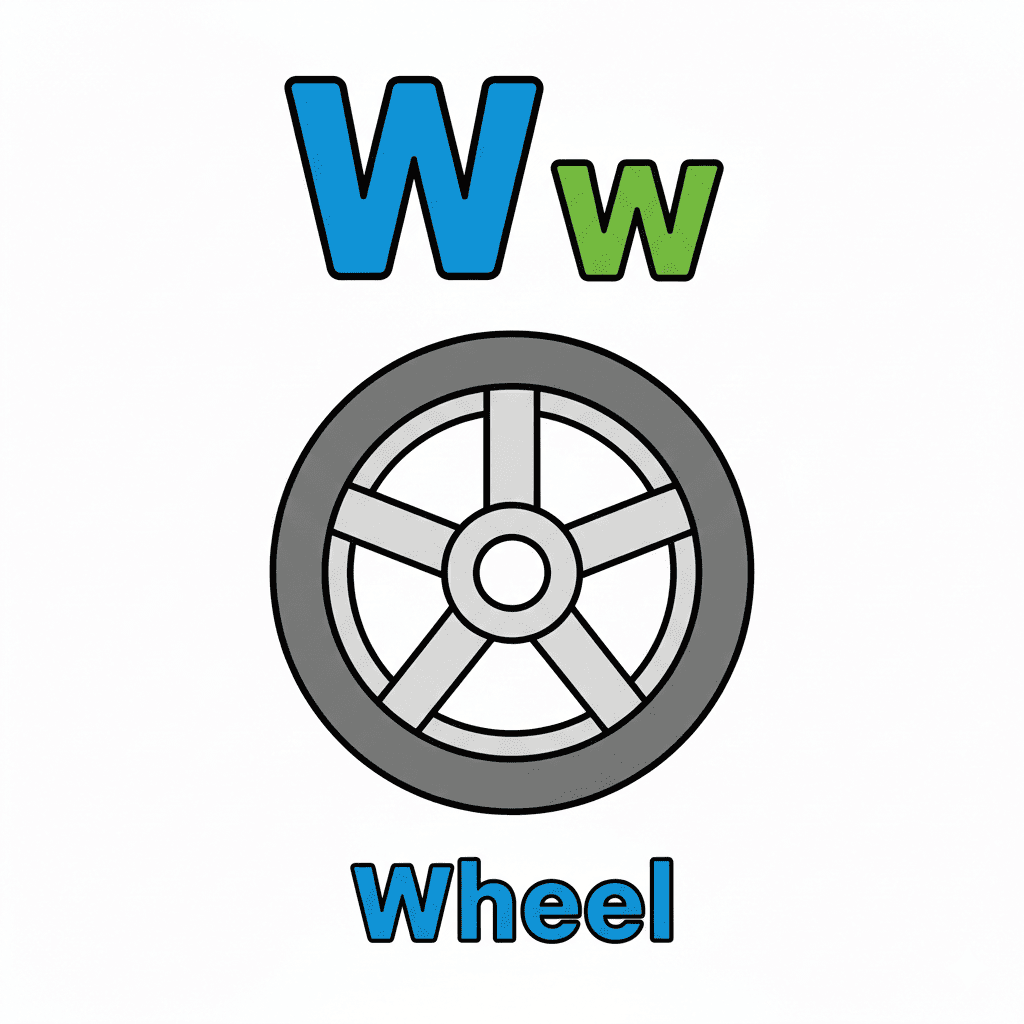
- Vocabulary Building: Introduces new words that start with the letter W like watch, watermelon, whale, wheel, and window.
- Fine Motor Skills: Coloring within lines improves hand-eye coordination and pencil control.
- Creative Expression: Allows children to express themselves while reinforcing alphabet learning.
- Concept Learning: Teaches various concepts like time (watch), food (watermelon), animals (whale), transportation (wheel), and buildings (window).
- Sound Discrimination: Helps children distinguish between W and similar sounds like WH, V, and R.
Tips for Teaching Letter W
Make alphabet learning fun with these creative teaching ideas:
- Practice making the /w/ sound by rounding the lips as if saying "oo" while making a voiced sound.
- Create a "Wonderful W World" collage with pictures of watches, watermelons, whales, wheels, and windows.
- Go on a "W Hunt" around the house to find objects that start with W (water, wall, wire, wood, etc.).
- Sing alphabet songs emphasizing the letter W section with whale-swimming or wheel-rolling movements.
- Trace the letter W with fingers before coloring - it's like drawing two V shapes connected at the base.
- Compare uppercase W with lowercase w to show they're similar but different sizes.
- Act out the words: check a watch, eat watermelon, swim like a whale, roll like a wheel, or look through a window.
- Create a mini-book of "W Words" using the colored pages with categories for different types of W words.
- Practice writing W in different textures: with watercolors, using watermelon seeds, in wet sand, or with wax crayons.
- Play "Whale Watch" game where children look for W words while making whale sounds.
- Make watermelon slice crafts using red and green paper.
- Compare W sound with WH sound - W is voiced while WH often has a slight breathy quality.
- Have a "Watermelon Day" with watermelon snacks while learning about fruits and healthy eating.
- Create window collages using colored cellophane or tissue paper.
- Experiment with wheels and axles to learn about simple machines.
Fun Facts About Letter W
- Letter W is the twenty-third letter of the English alphabet.
- W is the only English letter whose name has more than one syllable - it's pronounced "double-u".
- The /w/ sound is called a "voiced labiovelar approximant" because it's made with rounded lips and the back of the tongue raised toward the velum.
- Many W words come from Old English, like "watch" (from Old English "wæcce" meaning "watchfulness") and "wheel" (from Old English "hweogol").
- W is one of the newest letters in the English alphabet, developed in the Middle Ages from two V's or U's.
- The word "watermelon" comes from the fact that it's 92% water, making it one of the most hydrating fruits.
- Whales are the largest animals that have ever lived on Earth - blue whales can grow up to 100 feet (30 meters) long.
- The wheel was invented around 3500 BC in Mesopotamia and revolutionized transportation.
- Windows were originally just holes in walls - the word comes from Old Norse "vindauga" meaning "wind eye".
- The first wristwatch was made in 1868 for Countess Koscowicz of Hungary by Swiss watchmaker Patek Philippe.
- In Roman numerals, W is not used, but V represents 5.
- The letter W is sometimes called "double U" even though it looks more like "double V" - this comes from its Latin origins.
- W can make different sounds: /w/ as in "watch", sometimes silent as in "write", and sometimes as part of vowel combinations.
- Watermelons are actually berries (botanically called "pepos") and originated in Africa.
- Some whale species can communicate over distances of hundreds of miles using low-frequency sounds.
- The invention of the wheel is considered one of the most important inventions in human history.